.png)
Omnichannel Patient Engagement Suite (OPES)
Blog • 2 min read
What Is AI-Powered Patient Intelligence?
AI-powered patient intelligence explained: what it is, how it differs from traditional analytics, and why pharma commercial teams are adopting it.


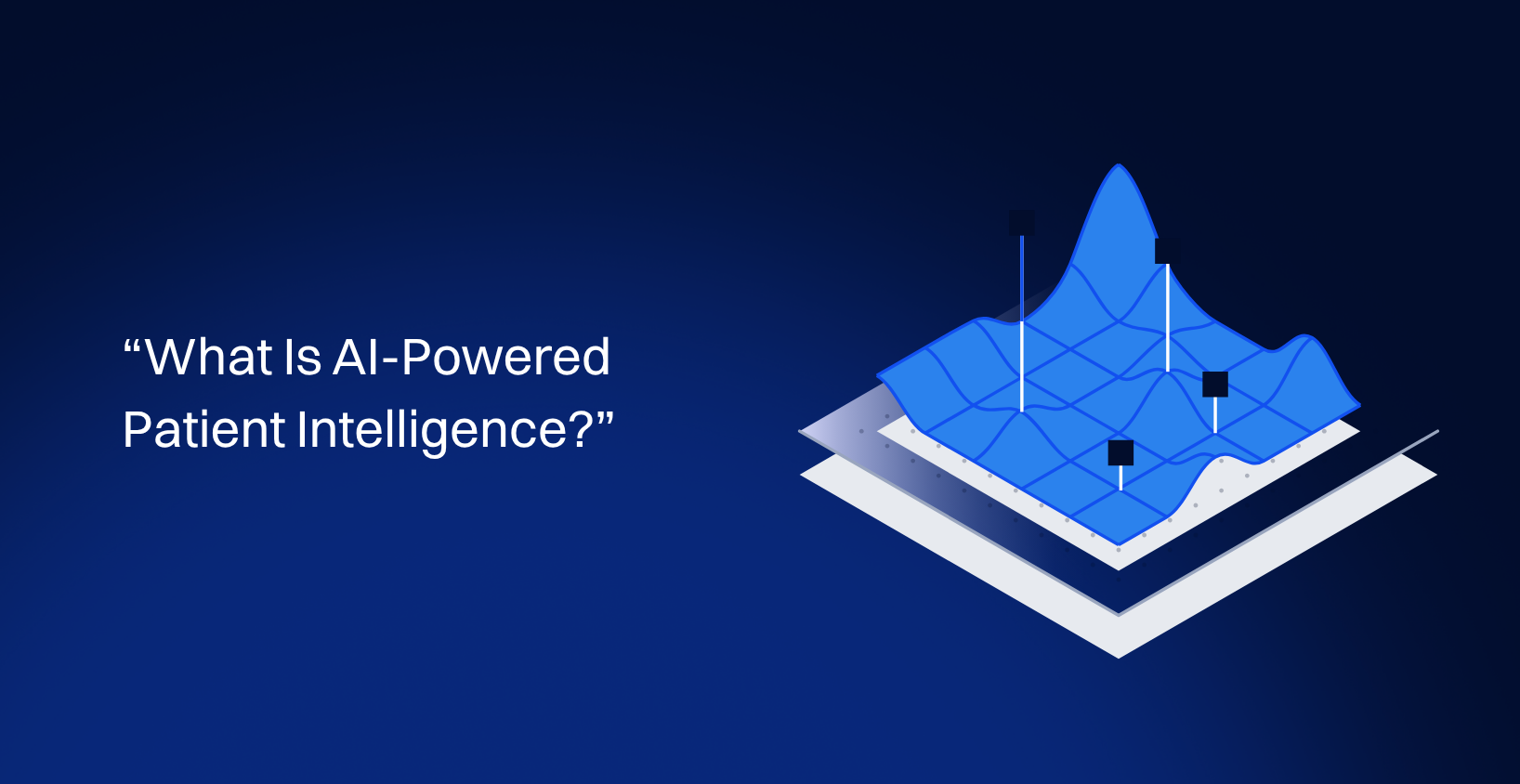
AI-powered patient intelligence is the use of artificial intelligence to analyze real-world patient data, including treatment patterns, patient-reported outcomes, and patient conversations, and turn it into decision-ready insights for pharma teams. Unlike traditional analytics, which reports what happened, patient intelligence explains what patients experience and why, at a speed and scale manual research cannot match.
Not another dashboard
Most pharma commercial teams already have analytics. They have prescription data, claims data, and quarterly market research decks. What they usually do not have is an answer to the questions those sources cannot see: why patients discontinue in month three, what drives switching, or which unmet needs never make it into a survey.
That gap exists because the richest signals sit in messy, unstructured sources: symptom diaries, patient conversations, questionnaire comments, real-world treatment journeys. Analyzing them manually takes months. AI changes the economics: language models and machine learning process millions of patient data points, cluster them into patterns, and surface the ones that matter for a specific brand question, in minutes rather than quarters.
What it looks like in practice
A patient intelligence platform combines three layers:
An integrated real-world data foundation. Longitudinal prescription data with pseudonymized patient and prescriber journeys, demographics, co-prescriptions and regional detail, unified with claims data, patient-reported outcomes, patient voice, wearable, registry and EMR data, and public sources. This matches the FDA's definition of real-world data as health data routinely collected from a variety of sources, and the variety is the point.
AI-driven analysis. Models that detect patterns humans would miss: persistence gaps and drop-off patterns, treatment sequences and switches, co-prescription combinations, differences in experience across patient segments.
Decision routing. Insights delivered in the language of the commercial question that prompted them: launch sequencing, market potential, patient support design, not raw data exports.
The gap this closes is documented in peer-reviewed research: in one cardiometabolic cohort published in the American Heart Journal, 50.1% of patients were non-adherent according to claims data while only 20.9% said so themselves. Neither source alone tells the truth about patient behavior; an integrated view gets far closer.
Why it matters now
Two shifts make this urgent in 2026. First, decision windows have compressed: launch performance in year one strongly predicts the following years, and competitors read the same syndicated data everyone buys. Differentiated insight has to come from somewhere the competition is not looking. Second, the interaction model changed: asking a question in plain language and getting an answer in minutes, rather than commissioning an eight-week analysis, rewires how often teams test their assumptions.
For a deeper look at how this reshapes commercial work end to end, see the cornerstone guide to AI in pharma commercial insights, and for how the underlying methods differ, read Generative AI vs traditional analytics.
Understanding what patients actually experience is exactly the kind of blind spot real-world patient data closes. The Permea Insight Hub turns patient insights into decisions your brand team can act on.
.jpg)